This article is an adaptation of the blog post that appeared on rijksoverheid.nl.
The start
Research into the effects of police work. In the 1990s, there was plenty of it. Then it gradually became a little quiet, as they also noticed at the Ministry of Justice and Security. This was a loss. And that is why, in 2019, they organized a meeting, led by Michel Bravo, now Head of Strategy, Knowledge Management, Innovation, and Research at the Directorate-General for Police and Security Regions at that ministry. Deans from various universities, as well as representatives from the Police Education Council and knowledge institutes such as Nivel and NSCR, came together and advised: start a multi-year research program to provide information to the ministry, police academy, and police. This led to the program What works in policing: Towards evidence-based policing in the Netherlands, launched as a collaboration between Netherlands Police, the Ministry of Justice and Security, and the NSCR.
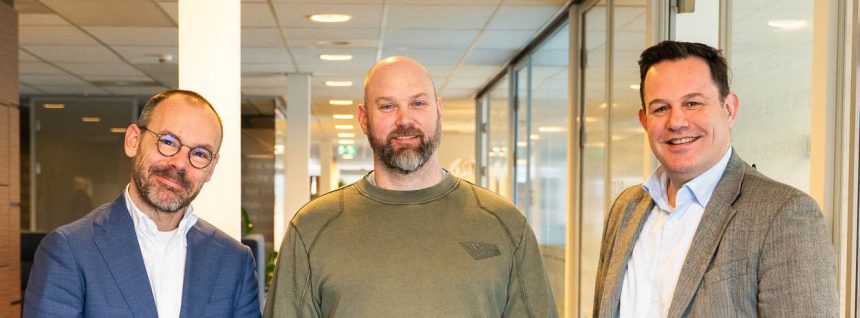
Stijn Ruiter (NSCR) was involved from the outset as senior researcher and lead of the research program. Ruben Boomsma, deputy team leader at the Amsterdam police, joined later. He knew Stijn as the supervisor of his bachelor’s thesis in Criminology and approached him again for help with an analysis to gain insight into criminal networks. Stijn: “That question fit perfectly with the research program we had just started, and so a special partnership began. We originally started as a five-year program, and in the beginning, it mainly took the form of doctoral research projects into evidence-based policing (EBP). Most of those studies are now (almost) complete. They deal with topics such as how effectively the police can help citizens at the front desk, what contributes to cases being solved, or violence by and against police officers.”
From the police
Police chief Ruben became one of the connections between the research world and everyday police practice, and later also one of the initiators of the Society of Evidence-based Policing Netherlands (SEBP.nl). That organization would like to see the entire Netherlands Police working in an evidence-based manner. Ruben: “I see the Society as a kind of panacea; we take on different roles to promote evidence-based working in the police force: we provide information about it, raise awareness of its added value, and actively promote the use of scientific knowledge and methods in everyday police work. In addition, we help colleagues use, set up, or interpret research so that the best available knowledge (the ‘evidence’) leads to effective policing. Finally, SEBP offers a platform for sharing knowledge, experience, and information in the field of EBP through meetings, newsletters, and the internet. In my opinion, once we are further along in the process, all these tasks should be assigned to the Netherlands Police. Currently, we do this on a voluntary basis.
Building momentum
Stijn: “Evidence-based policing is about police professionals using the best available evidence to inform policy, practices, and decisions. Logically, this requires close collaboration between the police and the scientific community. EBP has already proven itself in Anglo-Saxon countries. And we in the Netherlands can also be proud. We have established what EBP has achieved abroad and are now investigating how we can benefit from it in the Dutch context. As a movement, we may still be in our infancy in the Netherlands, but we have made a start. There is momentum, now it must take root within the Netherlands Police, at the police academy, and more broadly among partner organizations and in politics. I am confident that this will happen. After all, who wouldn’t want effective policing?
Extension
Looking back, we can certainly call the first period of the research program (2020 to 2025) a success. That is why it has recently been extended. Stijn: “For the coming period, the challenge is not just to conduct another study . There is also a meta-task, namely to further evidence-based policing. To this end, we must continue to ask the evaluation question when it comes to police action. So, it’s not just a matter of enthusiastically trying one solution after another. That passion is great, but sometimes we need to pause for a moment, preferably before we start an experiment, and think about how we are going to evaluate it.” Michel: “The key is for scientists and police to work together, and for us to then incorporate their findings into our policies. And that’s what we’re doing right now!”
Peter van der Laan, interim director of NSCR: “I am very pleased that the ministry has once again shown its willingness to invest in independent scientific research without first working out in detail which research questions and specific topics will be addressed.”
